
The human body is a phenomenal thing. I’m not just talking about mine – yours probably is too. But there are certain functions that still need explaining.
Itching, for example. If you have something wrong with your skin and scratching will only make it worse, surely the last thing you want your nervous system to do is make it itch. Of course you’re going to scratch it! An itch is irresistible. And the more you scratch it, the more irresistible it becomes. Until science tells me otherwise, I’m writing off itching as the body’s equivalent to pushing heroin.
Another one is sadness. What is the point of this emotion? Happiness you can understand. It gives us energy, confidence, strength, a desire to bond. It has health benefits, like lowering blood pressure and strengthening the immune system. So why haven’t we evolved to feel happy all the time?
The human body may seem like an accidental melange of random responses (some of us more than others) but we know that every response we have actually serves a purpose. Stress, fear, anxiety, pain… all these ‘negative’ responses are part of our survival toolkit. But sadness? What useful purpose does sadness serve, other than inspiring some pretty good songs and poems?
There’s your clue. Sadness, it turns out, is a thoughtful, processing emotion. Genuinely important to helping us find our way through life. And indeed death. When we’re happy, we tend to skip over details, pre-judge, rush into decisions, make mistakes. When we’re sad, we spend more time on reflection, contemplation and analysis. Sadness is the body’s way of telling us to get serious for a moment. We slow down and conserve energy, drill deeper into our souls and find answers that happy us would skip over.
That’s why sadness can actually be quite an addictive emotion – because although it hurts, it gives us more, fills us up, even makes us overflow. It enables us to understand, to accept, to find meaning and, if we’re really lucky, a rhyme for apple crumble.
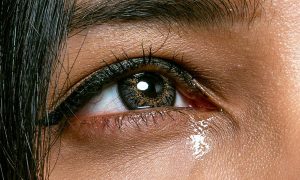
Another function of sadness is that it arranges our facial features to give off a clear signal that we need help and support. We can’t walk past a sad face, can we? Not without saying, “Cheer up, mate! It might never happen.” A sad face triggers the caring instinct in others that is the cornerstone of civilised society.
Well, I say that… There’s a bloke works in Sainsbury’s fruit and veg section who wears the saddest face you’ve ever seen – like Pagliacci after a few gins. Hangdog doesn’t begin to describe it. He puts the melon in melancholy. This should trigger all us shoppers to park our trolleys and give him a hug, but I’ve yet to see anyone do that. Maybe I’ll give it a go this weekend, see what happens. I might get double Nectar points.